 Compozit
Permits
Montreal Renovation Permits: A 2026 AI-Assisted Guide (Plateau, NDG, Verdun, Mile-End)
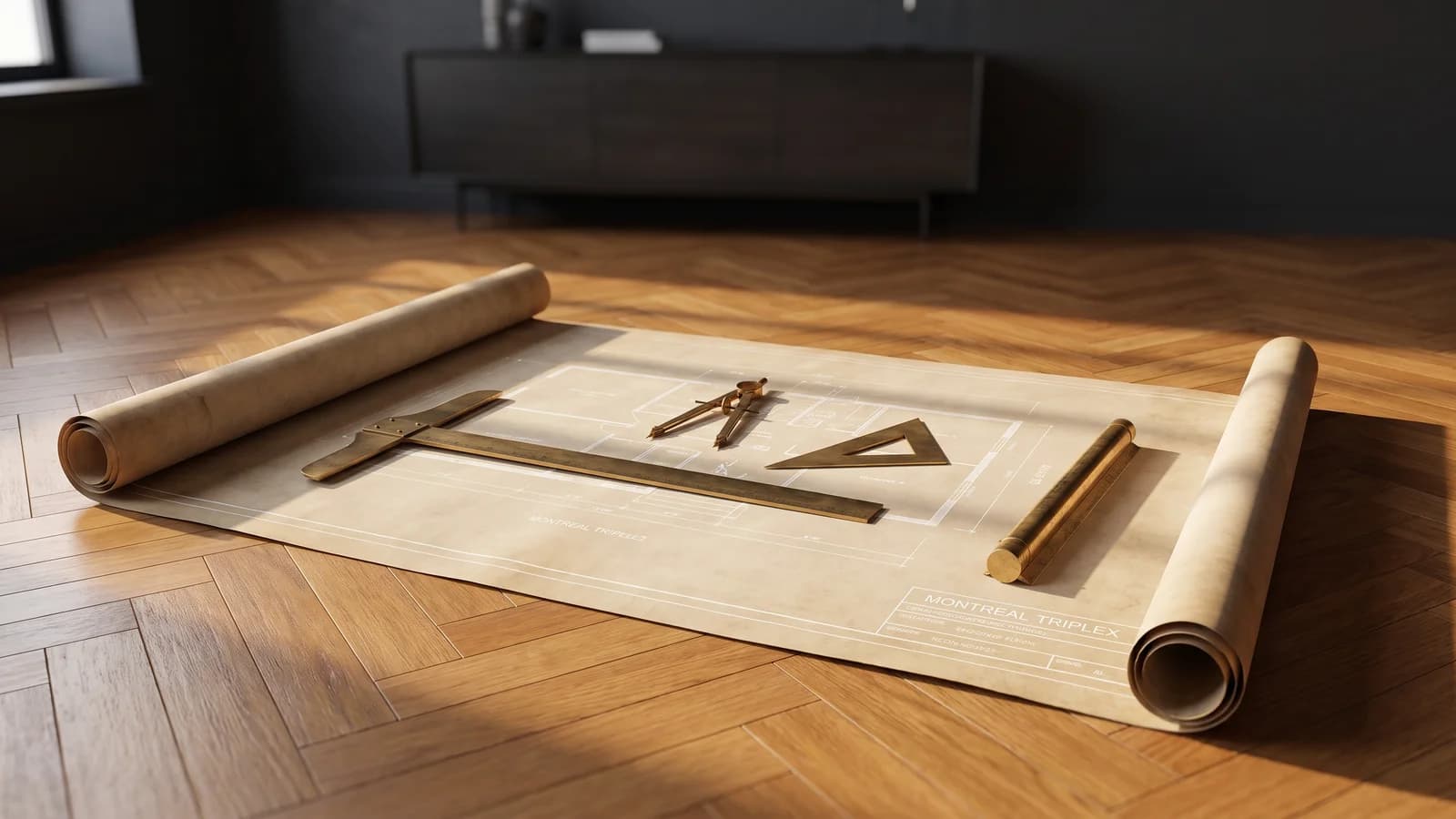
Montreal is the most rewarding place in North America to renovate. It's also one of the trickiest. Every borough has its own rules. Heritage zones, rental restrictions, structural requirements, electrical rules — they change at the borough line.
I've spent 15 years pulling permits in this city. Below is the practical guide I wish I could hand every homeowner the day they buy a triplex.
A note: laws change. This is the state of play in spring 2026. Verify with your borough before pulling any permit. Compozit's regulation lens (Check, shipping Q4 2026) automates most of this — you ask, it tells you what's required.
What needs a permit in Montreal
Almost everything visible from the street needs one. Most things that touch structure, electrical, plumbing, or facade need one. Cosmetic interior work usually doesn't.
Permit always required:
- Wall removal (load-bearing or not — Plateau and Mile-End check both)
- Adding or moving windows or doors on the exterior
- Modifying the facade in any visible way
- Subdividing units or changing unit count
- Adding plumbing fixtures (new bathroom, kitchen island sink)
- Adding electrical circuits or panel upgrades
- Roofing in heritage zones
- Decks, balconies, fences over ~2m
Permit usually NOT required:
- Painting (interior and most exterior except heritage)
- Refinishing floors
- Replacing existing fixtures with same-size fixtures (sink-for-sink, toilet-for-toilet)
- Cabinet replacement
- Replacing windows of the same size in non-heritage zones
- Most flooring work
Always verify:
- Anything in a heritage zone (Old Montreal, parts of Plateau, parts of Outremont, Mile-End in some sections)
- Anything within a rental property if you're a non-resident landlord
- Anything that affects shared walls in a triplex or duplex
Borough-by-borough quick reference
Plateau-Mont-Royal
The strictest borough. Pre-application meetings often required for facade work. Heritage zone enforcement is real. Wall removal almost always requires a structural engineer's letter (regardless of load-bearing). Expect 4–6 weeks for permit approval on anything non-trivial.
Le Sud-Ouest (including Saint-Henri, Verdun adjacency)
Faster than Plateau. Industrial heritage in some sectors (Pointe-Saint-Charles) adds review time. Major facade changes require borough sign-off.
Mile-End / Outremont (Outremont)
Strict on heritage and zoning. Subdivision work is heavily reviewed. Outremont requires advance applications for tree removal during renovation.
Notre-Dame-de-Grâce (Côte-des-Neiges-NDG)
Mid-tier complexity. Most single-family work is fast (2–3 weeks). Triplex subdivision is where it slows down.
Verdun
Surprisingly accessible. Verdun has actively worked to streamline permits. Standard renovation permits move in 1–2 weeks if your file is complete.
Rosemont-La Petite-Patrie
Mid-tier. Standard timelines (2–4 weeks). Beware: heritage rules apply on a few specific streets.
Le Plateau adjacent (Centre-Sud, Ville-Marie partial)
Heritage rules dense in some sectors. Always verify.
How to file a permit (the human way)
- Go to your borough website (not the city) — each has its own portal
- Identify your project type (renovation interior, renovation exterior, addition, demolition)
- Submit drawings, structural opinion if applicable, photos, and the fee (CAD $200–$2,000+ depending on scope)
- Wait. Check the portal weekly.
- Get inspector visits scheduled before, during, and after work
The process is doable. It's the uncertainty that crushes homeowners — not knowing whether your wall removal will need an engineer, whether your facade change will trigger heritage review, whether your contractor's "no permit needed" claim is right.
How AI is starting to handle this
The category of "AI building permit assistant" barely existed in 2024. By 2026, it's emerging. Most tools are generic — they tell you "you might need a permit" without knowing your borough.
Compozit's Check lens is built for Quebec / Montreal specifically. Borough-by-borough rules. Heritage zone awareness. Structural risk flags before you swing a hammer. Permit application checklists per project type. Expected timelines per borough.
What it'll answer in your project conversation:
You: Can I knock out this wall in a Plateau triplex?
Check: Probably load-bearing. You'll need a permit and a structural engineer's letter. Plateau-Mont-Royal averages 4 weeks. Want me to flag any other code issues with the layout I'm seeing?
What I tell every homeowner
- Don't pre-buy materials. Wait until your permit is in hand.
- Don't trust contractors who say "no permit needed" on structural work. Get it in writing if you're skeptical.
- Heritage zones are real. A 5-minute call to your borough saves weeks of grief.
- Renovating a triplex is different from a single-family. Subdivision rules are tight.
- Engineer's letters are worth it. $400–$1,000 for peace of mind on any structural change.
Real timing case studies
Mile-End duplex — wall removal. Permit submitted with structural engineer's letter on a Monday. Borough requested a clarification on Wednesday (sealed drawing required). Approved 18 days later. Total elapsed: 4 weeks even.
Plateau triplex — facade window enlargement. Submitted with full elevation drawings and a heritage-impact note. Borough scheduled a heritage review committee for the following month. Approved with conditions (specific paint color, specific muntin pattern) 7 weeks after submission.
Verdun single-family — kitchen renovation, no structural changes. Submitted online with photos and basic plumbing schematic on a Friday. Permit issued the following Wednesday. 5 days total.
Outremont addition — second-floor bedroom over an existing garage. Pre-application meeting required. Submitted 3 weeks after the meeting. Heritage review and zoning checks added 5 weeks. Approved with conditions 11 weeks after first submission. Started work 12 weeks in.
The pattern: simple work in renovation-friendly boroughs (Verdun, NDG, Rosemont) ships in 1–3 weeks. Anything heritage-adjacent or structural in Plateau or Outremont takes 4–11 weeks. Plan accordingly.
How a Compozit Check conversation will run
Once Check ships in Q4 2026, the agent will handle the borough lookup automatically. A real conversation:
You: I want to convert my Mile-End triplex from three units to two — combine the upper floors.
Check: That's a unit-count change. Mile-End is in Le Plateau-Mont-Royal — they require pre-application review for any unit-count modifications. Heritage rules also likely apply on your block. Estimated permit timeline: 6–8 weeks. You'll need a sealed structural drawing for the wall removal between units, plus a full unit-count modification application. Want the application checklist?
That's the 5-minute version of a question that today takes a homeowner 3 weeks to find answers to.
Six more borough notes
Hochelaga-Maisonneuve
Standard timelines for renovations. Adaptive-reuse projects (converting industrial to residential) get extra review. Many older buildings have undocumented modifications — verify before you cut.
Saint-Laurent
Suburban-style permitting. Faster than Plateau. Watch for setback rules on additions; older houses often violate current setbacks and grandfathered rights matter.
Lachine
Riverside heritage rules apply on certain streets. Otherwise straightforward. Adding a deck or terrace on the river side may need a riverbank protection review.
Montréal-Nord
Faster permitting. Some streets have specific facade rules tied to a 1990s urban-renewal program. Verify on a per-address basis.
Anjou
Standard. Adding a basement rental unit (a popular project here) requires both unit-count modification and fire-separation compliance — get an electrician's letter early.
Pointe-aux-Trembles
Renovation-friendly. Some industrial-heritage zones near the river require additional review. Otherwise unremarkable.
Cost ranges to budget for
| Item | Cost range (CAD) |
|---|---|
| Renovation permit (basic) | $200–800 |
| Renovation permit (complex / structural) | $800–2,000 |
| Structural engineer's letter | $400–1,000 |
| Heritage impact statement | $1,500–3,500 |
| Architect's stamp (if required) | $1,500–5,000 |
| Total permit-related budget on a kitchen reno | $1,500–4,000 |
| Total permit-related budget on a structural reno | $4,000–12,000 |
Build these into your project budget upfront. The biggest budget killer in Montreal renovations is not the trades — it's the unexpected permit-adjacent costs.
FAQ
Do I need a permit to paint my facade? In a heritage zone, yes (and you may need a specific paint palette). Outside heritage zones, usually no — but verify.
Do I need a permit to renovate my kitchen? If you're not moving plumbing or electrical, usually no. If you're adding a fixture or moving the sink, yes.
How long does a Montreal permit take? Verdun and NDG are fast (1–3 weeks). Plateau and Outremont are slow (4–8 weeks). Heritage zones add review time.
What does a Montreal renovation permit cost? $200–$2,000+ depending on borough and scope. Complex projects with engineer letters can hit $5k all-in.
Can AI just file the permit for me? Today no, and we don't recommend any tool that claims to. Permit filings are legal documents tied to your name. AI helps you prepare correctly. You file.
Does Compozit Check work for renovations outside Quebec? Quebec and Montreal first. We're building borough-by-borough logic for the markets we know. Other Canadian provinces follow as we expand.
What if my borough rejects my application? The agent reads the rejection notice, identifies the missing piece (structural opinion, heritage statement, electrical schematic), and prepares the resubmission packet. Most rejections add 2–4 weeks to the timeline.
Are heritage zone rules really enforced? Yes. Plateau and Outremont actively inspect facade work. A non-compliant paint color or window muntin pattern can trigger a stop-work order and a fine. Worth a 5-minute borough call before painting.
See Compozit Check → · Get on the waitlist → · Read the AI home renovation guide →
Keep reading
The AI Property Development Platform: A 2026 Field Guide
How AI is collapsing the property development stack — search, design, permits, sourcing, build — into one voice-first platform. Field notes from a 15-year architect on what's already shipping and what's next.
AI Home Renovation: The Complete 2026 Guide (From Vision to Move-In)
How AI now handles the full home renovation stack — design, sourcing, permits, contractors, negotiation, delivery. A field guide from a 15-year architect with real costs, real timelines, and what to do this weekend.