 Compozit
Renovation
AI Home Renovation: The Complete 2026 Guide (From Vision to Move-In)
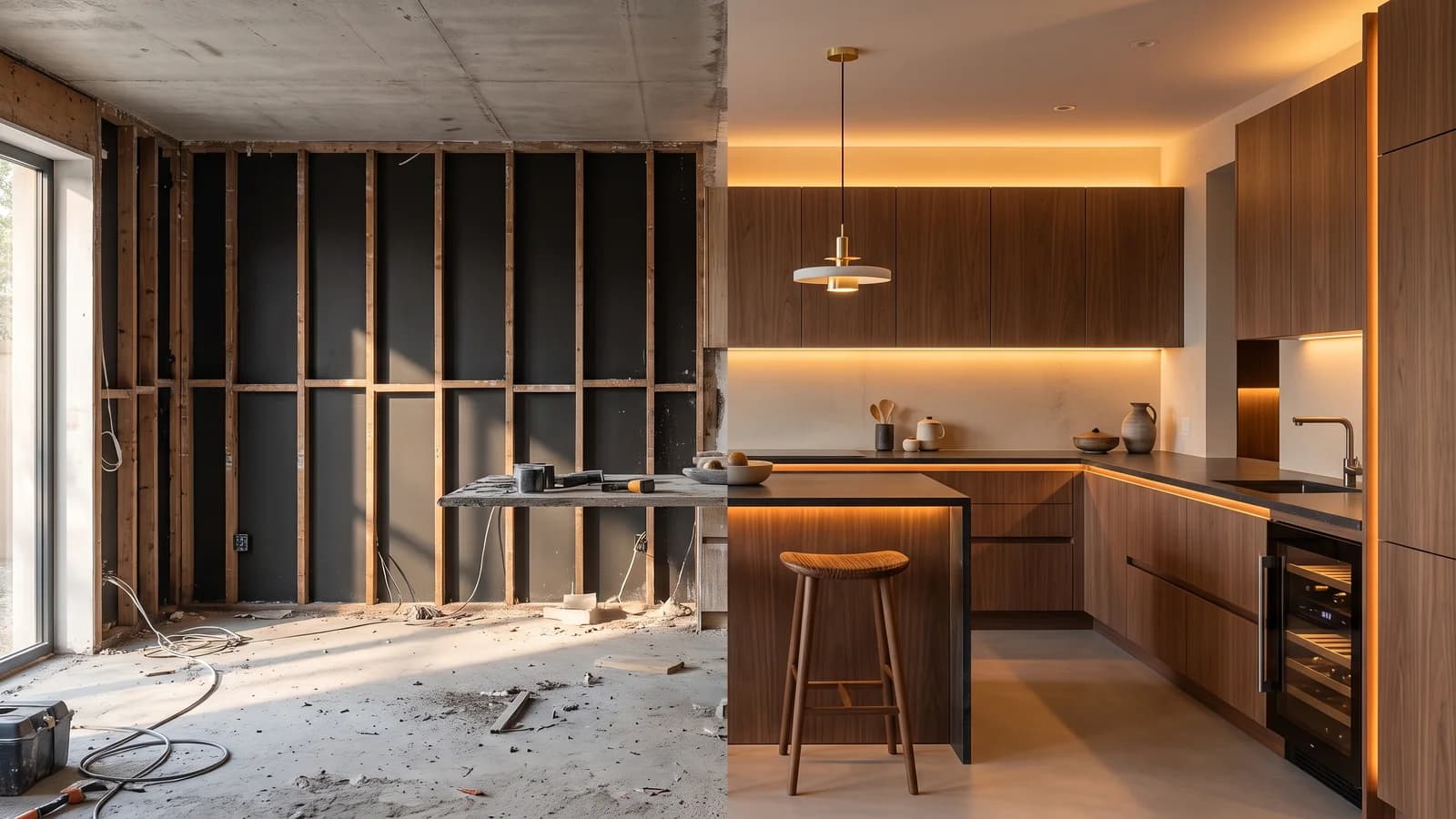
For 15 years I built renders for a living. Renderings that ended in a frame above somebody's mantel. Renderings that ended, full stop.
The renovation itself? Always somebody else's problem. The homeowner's problem.
That gap is what AI home renovation is finally starting to close in 2026. Not the render — the renovation. Permits, vendors, contractors, deliveries, the actual finishing of the actual project.
This is the field guide I wish I'd had every time a client called back two months after the render was approved, panicked that nothing had happened yet.
What "AI home renovation" actually means in 2026
The category has expanded fast. A few years ago, "AI home renovation" mostly meant AI interior design — upload a photo, get a render. That's a sliver of the work.
In 2026, the leading platforms (Compozit being the one I'm building) cover the full stack:
- Property search — find the right home for what you want to do
- Design and visualization — turn the space into a real, sourced plan
- Permits and regulation — know what's legal before you swing a hammer
- Sourcing and procurement — real products, real prices, real availability
- Vendor negotiation — agent-side bargaining for materials and trades
- Contractor coordination — vetted shortlists, quotes, scheduling
- Logistics — deliveries, installs, inspections, sign-offs
Compozit packages this as four lenses: Vision · Lens · Check · Flow. Vision is live today. The other three are next. Read more about the agent →
How an AI renovation actually unfolds
A real-style 60-second arc:
You: I want to renovate my kitchen. Plateau triplex, top floor.
Vision: I have your floor plan. Want a Scandinavian look under 25k all-in?
You: Yes. Keep the existing windows.
Vision: Done. 38 pieces sourced — 21 from local Quebec suppliers. Bill of materials: $18,400. Labor estimate: 4–5k. Heads up — the wall between the kitchen and dining is load-bearing.
Check: Plateau-Mont-Royal requires a permit for that wall removal plus a structural engineer's letter. About 4 weeks.
Flow: I can pull three contractor quotes by Friday. Want me to run it?
That's the arc. One conversation. From vision to reality.
What AI does well in renovation today
Real product matching
Furniture, fixtures, finishes — tied to live SKUs at real retailers. In Quebec, Compozit Vision pulls from EQ3, Structube, Tanguay, IKEA, Linen Chest, and a long tail of local suppliers. Prices are within ±5% of what you actually pay.
Cost estimates that hold up
Not "around $25k." A line-item breakdown by room, by material, by trade. The estimate's job is to be wrong by less than 10% — and on furniture and fixtures, it usually beats that.
Permit triage
Where the leaders separate from the followers. AI that knows your local code (Compozit Check handles Quebec / Montreal natively) catches what your designer would miss: heritage rules, zoning, structural risk, electrical limits.
Vendor negotiation
A homeowner doesn't have leverage. An agent that runs hundreds of similar projects across hundreds of vendors does. We see consistent 8–15% savings versus retail.
Contractor matching
Every contractor in the network has a reliability score from real past projects. The agent shortlists based on your timeline, scope, and budget, then gets you three bids without the back-and-forth.
What AI still can't do
We don't replace the human contractor on the job site. The trades still install. The agent coordinates and tracks. We don't replace the inspector. We don't pour concrete.
What we do is take the 80% of project management that nobody enjoys — sourcing, scheduling, comparing quotes, fielding vendor calls — and make it the agent's problem instead of yours.
How to start an AI renovation this weekend
- Decide the scope. One room? Whole floor? Whole house? Be specific.
- Set the budget. A real number. The agent will tell you what's realistic.
- Take photos. Daylight, no flash, every wall visible.
- Talk through the project. Voice or chat. Tell the agent what you're keeping, what you'd kill, what's negotiable.
- Approve before any spend. The agent will source, price, negotiate. You approve every purchase order before it's placed.
Try Vision today → — the design lens shipping now.
Realistic timelines
| Project | Without AI | With AI agent |
|---|---|---|
| Single-room refresh | 6–10 weeks | 3–5 weeks |
| Kitchen renovation | 4–6 months | 2–3 months |
| Full top-floor reno | 8–12 months | 4–6 months |
| Whole-home gut | 12–18 months | 8–10 months |
The biggest savings aren't on the trades — they're on the dead time. Waiting for quotes. Waiting for permit answers. Waiting for the contractor to call you back. The agent collapses those weeks.
Cost: what changes with an AI agent
| Cost line | Traditional | AI-managed |
|---|---|---|
| Design / planning | $3,000–10,000 | included |
| Sourcing markup | 10–20% | ~0% |
| Permit consultant | $500–2,000 | included |
| Contractor coordination | your weekends | agent-managed |
| Time-to-finish | baseline | 30–40% faster |
Phase-by-phase: what each lens does
Phase 0 — Conversation and scoping
You talk through the project. Vision and Lens listen, gather context, and write the project brief. Output: scope, budget, timeline, must-haves, deal-breakers.
Phase 1 — Design and pricing
Vision generates 2–4 design directions, sources real products, and returns the bill of materials. You iterate by talking. Output: approved BOM with line-item costs.
Phase 2 — Permits and structural review
Check reads the design and the property data, flags every regulatory issue, and pulls the permit application checklist for your borough. You approve before any filing. Output: permit-ready packet, structural opinions where needed.
Phase 3 — Sourcing and vendor negotiation
Flow places the orders with vendors we've vetted, negotiates pricing, and books delivery slots. You approve every PO. Output: sourced materials with confirmed delivery dates.
Phase 4 — Contractor coordination
Flow shortlists 2–3 contractors based on your scope and timeline, gets bids, schedules pre-construction walkthroughs. You pick. Output: signed contract, mobilization date.
Phase 5 — Build and inspection
Flow tracks the schedule, holds vendors accountable for deliveries, coordinates inspections, and surfaces issues to you in real time. You make the final calls. Output: finished project, signed-off inspections, paid invoices.
The agent doesn't replace any of these phases. It removes the friction between them.
Real-world risks the agent catches
A few examples from real projects:
- Plateau wall removal flagged as load-bearing. The homeowner thought it was a partition. The agent caught it from the floor plan + property records, flagged the structural review need, saved an estimated 6 weeks of mid-renovation surprise.
- Vendor order arriving in the wrong dimension. Caught at PO confirmation by the agent cross-checking against the bill of materials. Avoided a $2,800 wrong-size sectional.
- Permit application missing an electrician's letter for a basement rental. Anjou borough requires it for fire-separation compliance. Agent flagged at submission, saved a 4-week resubmission cycle.
- Contractor schedule conflict with cabinet delivery. Cabinets booked for a Tuesday install, contractor said they'd be ready Thursday. Agent caught and rebooked, saved the cabinet-storage fee.
These are the unsexy wins. Most renovations die on a dozen small ones.
What an agent can't replace
Worth being honest:
- Site visits with a tape measure. Eventually.
- Holding your spouse's hand through a $400 lighting decision. Maybe never.
- Trades on the actual floor. Never.
The agent is a project manager, sourcing assistant, permit researcher, and vendor negotiator rolled into one. It's not the contractor. It's not the inspector. It's not the homeowner.
FAQ
Will AI renovate my house autonomously? No, and you don't want it to. The agent handles 80% of the project management work. You stay in the loop on every meaningful decision and every spend.
Is this just for new construction? No — most of our projects are renovations of existing homes. Plateau triplexes, NDG bungalows, Westmount duplexes. The agent is built for the messy reality of renovation.
Does it work outside Quebec? Vision and sourcing work anywhere products ship. Check (permits) is fully built out for Quebec / Montreal first; other markets follow as we expand.
What about contractors I already know? Bring them. The agent works with your existing trades. You don't have to use our shortlist.
Does the agent file the permit for me? The agent prepares the application packet and runs the borough lookup. You file. Permits are legal documents tied to your name — no responsible AI will file them autonomously, and we don't.
Can I get a copy of all the data the agent collects on my project? Yes. Every project has an export — full conversation log, every decision, every PO, every contractor bid, every inspection. Yours to keep, yours to delete.
What's the smallest project this makes sense for? A single-room refresh under $2k. Below that, the freemium tier of Compozit Vision is enough — you don't need the full agent.
What's the largest project the agent can run? We've tested up through 6-figure full-floor renovations. Multi-unit and commercial projects are on the roadmap as Flow expands.
If your project has been stuck on PowerPoint for too long, this is what the next phase looks like. Get early access to Compozit →
Keep reading

The AI Property Development Platform: A 2026 Field Guide
How AI is collapsing the property development stack — search, design, permits, sourcing, build — into one voice-first platform. Field notes from a 15-year architect on what's already shipping and what's next.

AI Interior Design vs. Traditional Designer in 2026: Honest Cost & Quality Comparison
After 15 years working as a licensed architect alongside interior designers, here's the honest comparison: when AI interior design wins, when a human designer is worth it, and exactly what each costs in 2026.