 Compozit
Design
AI Interior Design vs. Traditional Designer in 2026: Honest Cost & Quality Comparison
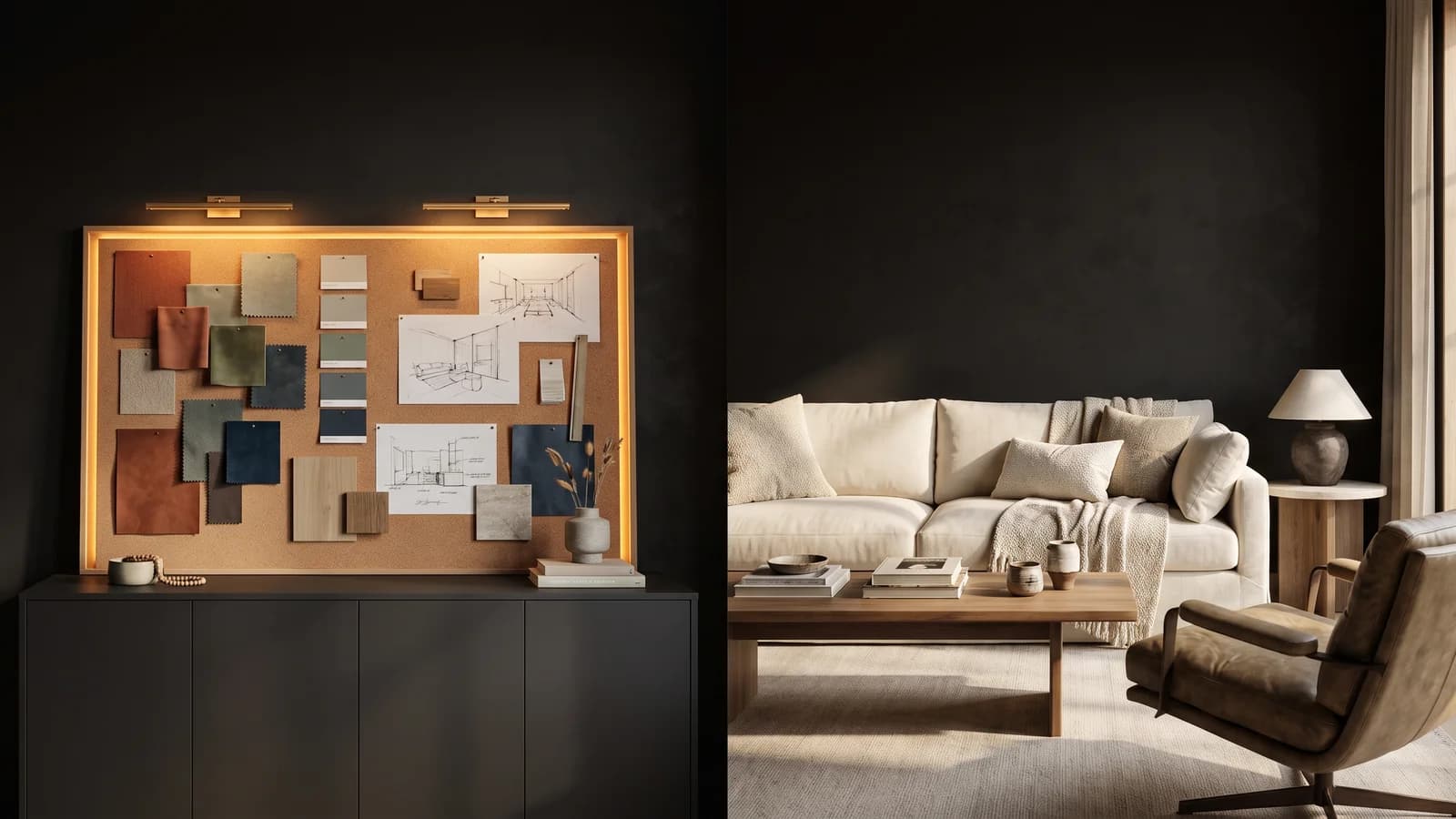
I've worked alongside interior designers my whole career. Some of them are brilliant. Some are not. None of them work for $14 a month.
In 2026, AI interior design is good enough that for 80% of residential projects it's the right starting point — and for many, the only step needed. For the other 20%, a human designer is worth every dollar. This is the honest comparison.
What AI interior design does in 2026
The leading AI interior design tools (Compozit Vision, REimagineHome, RoomGPT, Spacely AI, Interior AI, Planner 5D AI features) all do roughly the same thing today:
- Take a photo of your room
- Apply a style or design prompt
- Return a photo-grade redesign in 5–30 seconds
- (Best ones) match real furniture at real prices
The differences are mostly in what happens after the render. Compozit Vision sources real products at real Quebec retailers, returns line-item costs within ±5%, and iterates by voice. RoomGPT gives you a free render and you're on your own. REimagineHome publishes the best blog content in the category. They all handle visualization well.
What a human designer does
A traditional designer or e-design service (Havenly, Decorist, Modsy before it shut down, plus thousands of independents) works like this:
- Intake call (or async questionnaire)
- Mood board + 1–2 design concepts (1–2 weeks)
- Revisions (2–3 rounds, each 1–2 weeks)
- Final design + shopping list (sometimes with markup on furniture)
- Optional: install help
Strong designers add things AI can't yet:
- Taste curation across decades of seeing what works
- Material / fabric / texture decisions in person
- Negotiating with custom fabricators
- Holding your hand through hard tradeoffs
- Catching things in floor plans that aren't in photos
The honest cost comparison
| Category | AI interior design | E-design service | In-person designer |
|---|---|---|---|
| Software / fee | $0–$49/month | $129–$1,299/room | $1,500–$10,000+/room |
| Time to first concept | 5–30 seconds | 1–2 weeks | 2–4 weeks |
| Revisions | Unlimited | 2–3 rounds | Negotiated |
| Real product sourcing | Yes (with prices) | Yes (often with markup) | Yes |
| Cost estimate accuracy | ±5% on furniture | Variable | Variable |
| Permit / structural awareness | Compozit Check (coming) | Rare | Yes |
| Contractor coordination | Compozit Flow (coming) | No | Yes (premium) |
When AI wins
Use AI interior design when:
- You're refreshing a room (not gutting it)
- Your budget for design help is under $1,000
- You want to iterate fast and try multiple styles
- You know what you like, you just need help executing
- The space doesn't need structural decisions
This is most homeowners, most of the time. Compozit Vision is shipping on iOS.
When a human designer wins
Hire a designer when:
- You're doing a whole-home gut renovation with structural changes
- The space has weird constraints (heritage, multi-level, awkward angles)
- You have a $50k+ furnishings budget and want it perfectly executed
- You hate making decisions and want someone to make them for you
- The project has trade coordination needs beyond a single contractor
A great designer in that context is the difference between a finished home and a half-finished home.
When you want both
The honest answer for most ambitious projects: use AI to iterate fast on concepts and budgets, then bring in a designer for the last 20%. AI nails the obvious 80% (style direction, sourcing, costing). The designer earns their fee on the hard 20% (taste calls, custom work, hand-holding).
Three real scenarios from the last six months
Scenario A — Plateau condo refresh. Single 32-year-old buyer, 800 sq ft, $5k furnishings budget, two weeks to move in. AI gets the entire job done. Vision generated three Scandinavian variations, sourced 14 pieces from EQ3 and Structube totaling $4,820, scheduled deliveries. Designer time required: zero.
Scenario B — Westmount duplex gut renovation. Family of four, full top floor, $250k construction budget, 8-month timeline. AI did the design exploration and BOM. A licensed designer handled the structural conversation, picked the natural-stone counter, made the call on whether to keep an existing fireplace, and walked the contractor through final installs. Combined cost: $14k of designer time on top of AI tools. The designer was worth every dollar — but the AI saved 4 weeks of upfront concept iteration.
Scenario C — Saint-Henri triplex flip. Investor running three units back-to-back. AI ran the entire stack — Vision for design, BOM for sourcing, cost models for ROI. Designer not hired. The three units shipped on a 14-week schedule that would have been 22 with traditional consultants. Margin improved by 6 points.
Pattern: simple scope and clear taste = AI alone. Complex structural work or expensive material decisions = AI plus a designer. Repeatable projects where you've got a system = AI alone, scaled.
What designers will do better in 2026 than AI
Be specific. Designers will keep winning on:
- Material decisions in person. Light, texture, fabric hand. AI is improving here, but choosing a fabric remains a physical task.
- Custom fabrication. Built-ins, millwork, anything bespoke. Local fabricators have relationships.
- Negotiating with high-end vendors. A designer's trade discount on a $30k sofa is real money.
- Holding clients through hard decisions. Some couples need a third party to break a tie.
- Heritage and restoration work. AI doesn't yet have great judgment on preserving period detail.
If your project doesn't lean heavily on those, AI is the right starting point.
A note on sourcing and trade discounts
Designers historically charged a markup on furniture (10–20% above retail) in exchange for sourcing labor. AI compresses that markup to zero — Vision sources at retail directly. For a $20k furnishings budget, that's $2,000–$4,000 saved on sourcing alone.
The flip side: a great designer with a deep trade book can sometimes get a better price than retail, because trade discounts on premium brands can run 15–30%. If your project is in that premium range, the designer's network can pay for itself.
Cost calibration table
| Furnishings budget | AI alone | AI + designer (last 20%) | Designer alone |
|---|---|---|---|
| Under $5k | $14–49/mo | not worth it | $1,500+ designer fee |
| $5k–$20k | $14–49/mo | $1,500–$3,000 designer fee | $3,000–$6,000 designer fee |
| $20k–$50k | $14–49/mo | $3,000–$6,000 designer fee | $5,000–$15,000 designer fee |
| $50k+ | $49/mo | $5,000–$15,000 designer fee | $10,000–$50,000 designer fee |
The take: under $20k in furnishings, AI alone wins on cost-effectiveness. Above $20k, the designer often pays for themselves through trade discounts and time saved on hard decisions.
What's coming next
The gap that AI hasn't closed is execution past the render. Most AI interior design tools stop at the picture and let you figure out sourcing, permits, contractors, and delivery on your own.
Compozit is built differently. Vision is the design lens, shipping today. Lens (property search), Check (permits and regulation), and Flow (sourcing, vendors, contractors, deliveries) follow. The intent is to handle the full stack — not just the picture.
FAQ
Is AI interior design accurate enough for a real renovation? For visualization and product sourcing, yes — the leaders are reliably good. For permit and structural decisions, the answer depends on the tool. Most AI tools don't try; the leading platforms (Compozit Check, coming Q4 2026) do.
How much does AI interior design cost in 2026? $0–$49/month for software. Compare with $129–$1,299 per room for an e-design service or $1,500+ for in-person.
Will AI replace interior designers? For 80% of residential projects, AI is now sufficient. Designers will keep working on complex, custom, or high-end work where taste and human relationships still matter most.
Can I use AI for the design and a contractor for the build? Absolutely. That's how most projects will work in 2026 and beyond. The agent gets you the design, the BOM, and the costs; the contractor builds it.
What about high-end designer brands the AI doesn't recognize? This is the gap that closes slowest. Niche or boutique brands without programmatic catalogs are still the designer's territory. AI handles the mainstream and the long-tail mainstream well; it doesn't yet pull from a rolodex of fabricators in Vermont who only take phone orders.
Is AI design biased toward a "tasteful default" look? Yes, somewhat. Earlier models were notably biased toward beige Scandinavian. 2026 models are better but still over-index on a few popular aesthetics. If you want bold maximalism, expect to iterate harder.
Can a designer use Compozit themselves? Yes — and many do. The fastest design firms in 2026 are using AI for first-pass concepts and bills of material, then layering their personal taste, fabric and material expertise, and supplier trade discounts on top of the AI baseline output.
Keep reading
The AI Property Development Platform: A 2026 Field Guide
How AI is collapsing the property development stack — search, design, permits, sourcing, build — into one voice-first platform. Field notes from a 15-year architect on what's already shipping and what's next.
AI Home Renovation: The Complete 2026 Guide (From Vision to Move-In)
How AI now handles the full home renovation stack — design, sourcing, permits, contractors, negotiation, delivery. A field guide from a 15-year architect with real costs, real timelines, and what to do this weekend.