 Compozit
Renovation
The AI Property Development Platform: A 2026 Field Guide

For 15 years I built renders for a living. The deliverable was always a picture. The renovation itself was somebody else's problem.
In 2026, that's finally changing. Not because rendering got better — although it did. Because the category changed. The unit of work for AI shifted from "make me a picture" to "run my project." That shift is what an AI property development platform is.
This is the field guide to what an AI property development platform actually is in 2026, what it ships today, and what it does next.
What an AI property development platform is (and isn't)
There are now hundreds of AI tools for property work. Most are point solutions:
- AI interior design tools — RoomGPT, REimagineHome, Spacely AI, Compozit Vision
- AI virtual staging — Collov, Interior AI
- AI floor planners — Planner 5D
- AI listing search — emerging
- AI permit checkers — emerging
A platform is different. A platform takes the entire stack — search → design → permits → sourcing → build — and runs it as one connected workflow, with one memory of your project, one agent that switches contexts as the work evolves.
That's what Compozit is. We call the contexts lenses:
- Vision — design lens (live today)
- Lens — property search (Q3 2026)
- Check — regulation and permits (Q4 2026)
- Flow — sourcing, vendors, contractors, build (Q1 2027)
Read more about the four lenses →
Why platforms beat tools
A tool gives you an answer. A platform gives you an outcome.
The most expensive minute in any renovation isn't the trades. It's the dead time between tools — copying numbers from your designer's mood board into a contractor email, retyping the same room dimensions into three different apps, forwarding listings to your spouse and losing track of which one had the load-bearing wall problem.
A platform absorbs that dead time. The state lives in one place. The agent remembers what you said yesterday.
What's already shipping in 2026
The most mature lens of any AI property platform today is design. Compozit Vision is the design lens shipping on iOS — photo-grade renders in seconds, real furniture from real stores, voice and chat iteration. Cost estimates within ±5% of what you actually pay on furniture and fixtures.
What works, today:
- Photo-grade renders in 5–15 seconds
- 150+ design styles authentically interpreted
- Real product matching at real retailers (in Quebec: EQ3, Structube, Tanguay, IKEA, Linen Chest, plus a long tail)
- Voice and chat iteration ("warmer, less white, swap the rug")
- Multi-room and whole-home plans
What's still not solved by tool-shaped AI:
- Permits and zoning (Compozit Check, Q4 2026)
- Property search by voice (Compozit Lens, Q3 2026)
- Vendor negotiation (Compozit Flow, Q1 2027)
- Contractor coordination (Compozit Flow)
How a real platform conversation runs
Here's what a 60-second slice looks like once all four lenses are live:
You: Find me a duplex in Mile-End under 850k with rental potential.
Lens: Three matches. The Saint-Joseph one has the highest upside. Want to see it styled?
You: Yes. The upper unit, Scandinavian, under 12k for furniture.
Vision: Done. 22 pieces sourced. $11,420. Heads up — the wall between kitchen and dining is load-bearing.
Check: Plateau-Mont-Royal requires a permit and a structural engineer's letter. About 4 weeks.
You: Get me three contractor quotes.
Flow: Three vetted quotes coming in by Friday. I'll handle the back-and-forth and confirm with you before booking.
One thread. Four lenses. Done.
Why local-first matters
Property is the most local business there is. Permits change at the borough line. Suppliers change at the city line. Contractor reliability scores change project by project.
A truly useful AI property platform has to be local-first. Compozit launches in Quebec and Montreal first — building code logic, borough-specific zoning rules, vendor relationships with EQ3 / Structube / Tanguay / Linen Chest, French-language support coming. National rollout follows. International, after that.
The opposite approach — a generic, global, tool-shaped AI — gives you generic answers and pretty pictures that don't survive contact with your borough's permit office.
Cost: what changes with a platform
A traditional renovation has roughly 15–20% in friction cost: designer fees, contractor markups, lost weekends, decision fatigue, the "premium for not-knowing" that vendors charge homeowners.
An AI platform compresses most of that. Not by replacing trades. By replacing the project-management layer above them.
| Cost line | Traditional | AI platform |
|---|---|---|
| Design / planning | $3,000–10,000 | included |
| Sourcing markup | 10–20% | ~0% |
| Permit consultant | $500–2,000 | included |
| Contractor coordination | your weekends | agent-managed |
| Time-to-finish | baseline | 30–40% faster |
What to do this weekend
If you're early in a project: try Compozit Vision. The design lens is shipping today and it's the most concrete thing you can use right now.
If you're planning a real renovation in Quebec or Montreal: join the waitlist. The full four-lens platform is rolling out next.
If you're a designer, builder, or developer: we're partnering with selected pros for early access to Lens, Check, and Flow. Get in touch.
Why the platform shape matters for AI
Most AI tools are built tool-shaped because the model is the product. Generate a render, sell the render, move on. That's a sustainable business at small scale, and dozens of companies are doing it.
A platform is a different bet. It assumes the model is a commodity (or will be), and the value lives in state, integration, and trust. State means the agent remembers your project. Integration means the agent can act on real systems — vendor APIs, MLS feeds, permit portals, contractor networks. Trust means the agent can spend your money under your approval, with audit trails, with hard caps.
That's much harder to build than a render tool. It's also why one platform can absorb the work that today is split across 8 SaaS subscriptions, 3 designers, 2 contractors, and your weekends.
What's in the data layer
A real platform earns its keep through proprietary data. For Compozit:
- Curated property listings in the launch geography — not just MLS scrape, but vetted listings with our own enrichment (true cost-of-ownership, ROI signals, renovation-feasibility scores).
- Real product catalog mapped to live SKUs at retailers we've integrated. Live prices, live stock.
- Borough-level permit and zoning logic for Quebec / Montreal — built from primary sources, not generic web scrapes.
- Vendor and contractor reliability scores computed from real past project outcomes (delivered on time, within budget, with quality holds).
- Project memory — every client conversation, every decision, every approved budget. The agent gets smarter over time.
A render tool can't do this. A platform has to.
Three customer personas we built for
Homeowner Alice. Owns a Plateau triplex top floor. Wants to renovate the kitchen and bathroom over six months without hiring a designer. Budget: $50k all-in. Compozit's job: get the design right, source the materials, pull the permit, find the contractor, track the build.
Investor Ben. Buys distressed triplexes in Saint-Henri and Hochelaga. Renovates back-to-back. Wants to stack 6 projects in 18 months. Compozit's job: find the right properties, model the ROI, run the renovations on parallel tracks, hold vendors accountable.
Developer Camille. Boutique condo developer. Builds 4–8 unit projects in Montreal. Wants to compress the design-to-permit cycle and cut sourcing markups. Compozit's job: design unit interiors at scale, pull permits per unit, source furnishings for staging, coordinate handoff to broker.
A platform serves all three with one product. A render tool only serves Alice — and only on the design step.
Why now
Three things changed in 2024–2025 that make this platform possible:
- Voice and multi-modal LLMs got reliable enough to take messy human input and produce structured project state.
- Real-time vendor APIs and product catalogs got accessible — retailers like EQ3, Structube, and IKEA have programmatic price/stock feeds now.
- Local govt portals modernized — Quebec boroughs increasingly accept online permit applications, which means an agent can actually file (with human approval).
The category window opened in 2025. Compozit was built to walk through it.
FAQ
Is "AI property development platform" just a marketing word for "AI tool"? No. A tool gives you a picture. A platform runs your project. The state, the memory, the workflow live across the whole stack — search, design, permits, build.
Does Compozit replace contractors and trades? No. The agent runs the project-management layer. Trades still install. Inspectors still inspect. We coordinate them, get quotes, track timelines, hold vendors accountable.
What's live today vs coming? Vision (design lens) ships today on iOS. Lens (Q3 2026), Check (Q4 2026), Flow (Q1 2027) follow.
Why Quebec and Montreal first? Property is local. We're building code logic for the borough we live in before going wider. Quality first, scale second.
Try Vision today → · Meet the agent → · Get on the waitlist →
Keep reading
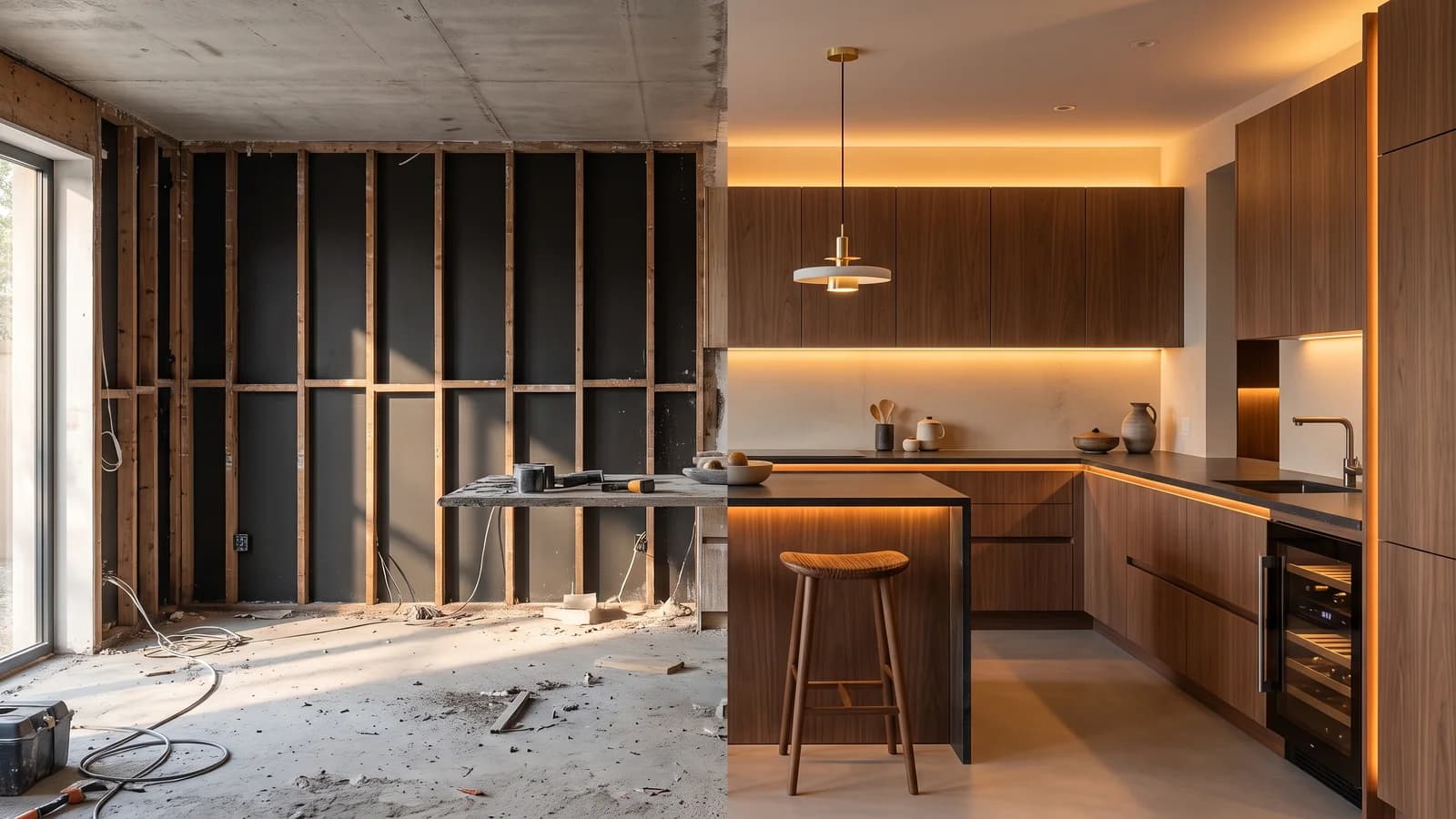
AI Home Renovation: The Complete 2026 Guide (From Vision to Move-In)
How AI now handles the full home renovation stack — design, sourcing, permits, contractors, negotiation, delivery. A field guide from a 15-year architect with real costs, real timelines, and what to do this weekend.
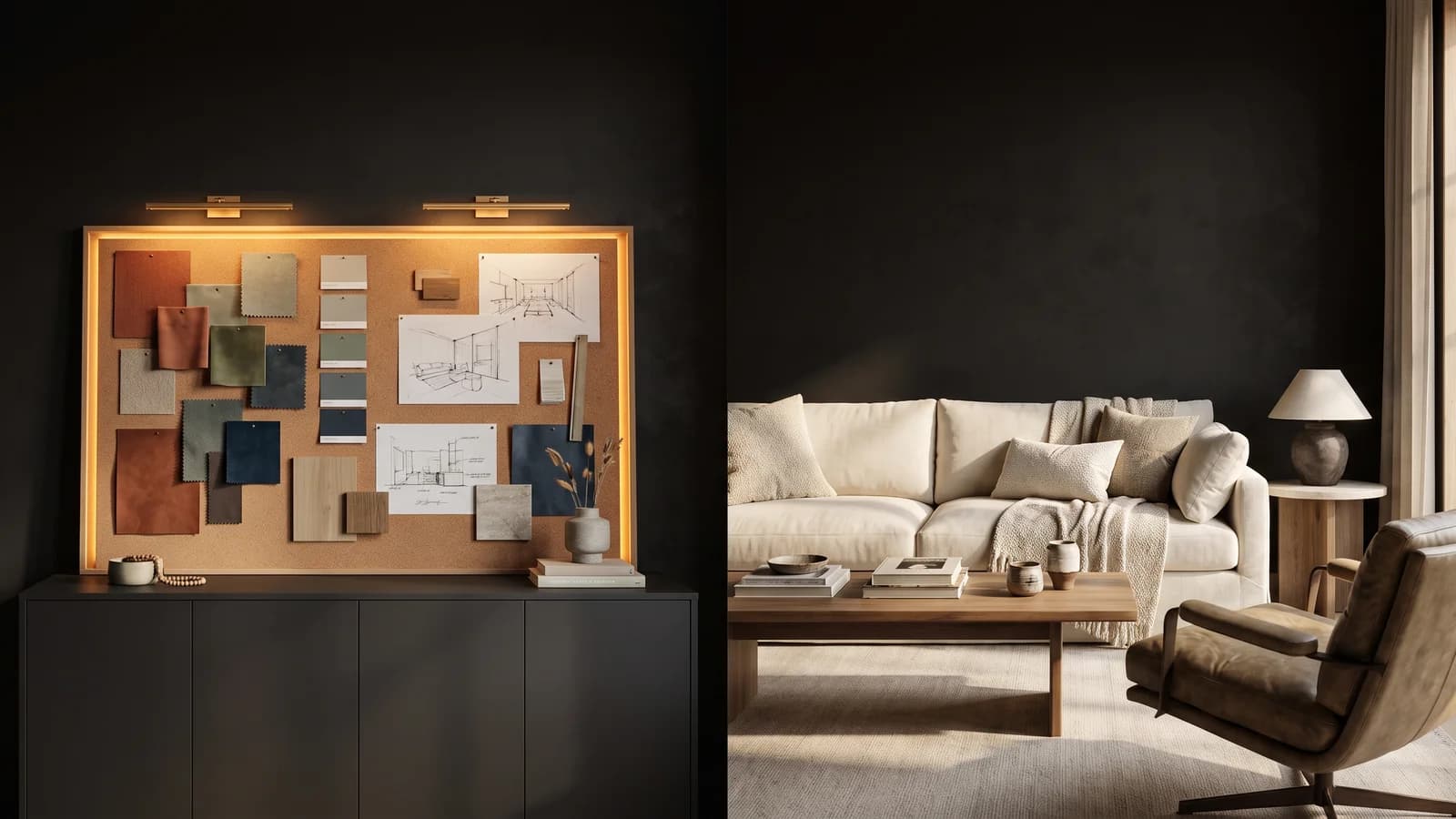
AI Interior Design vs. Traditional Designer in 2026: Honest Cost & Quality Comparison
After 15 years working as a licensed architect alongside interior designers, here's the honest comparison: when AI interior design wins, when a human designer is worth it, and exactly what each costs in 2026.